Showing posts with label indigenous rights. Show all posts

Oct 22, 2013

Stephen Harper and the logic of colonialism: why Maori should care

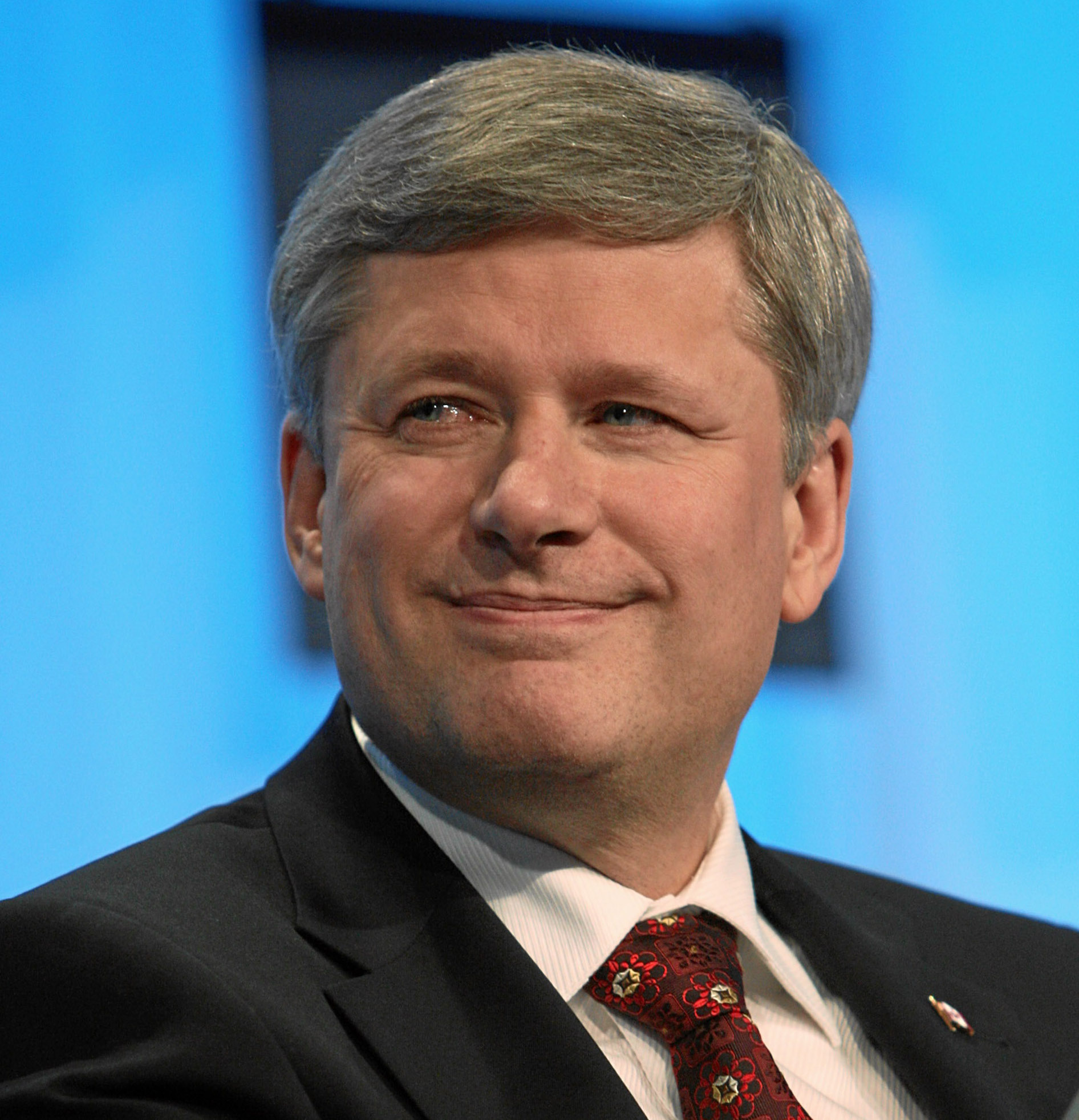
Prime Minister Stephen Harper (looking far too pleased with himself)
By Remmy Steinegger

"We also have no history of colonialism. So we have all of the things that many people admire about the great powers but none of the things that threaten or bother them" – Stephen Harper, Prime Minister of Canada. 

That's funny. In 2008 Harper apologised in Parliament for residential schools - one of the most insidious expressions of colonialism in Canada. In a moment of lucidity he explained that:

"Two primary objectives of the residential school system were to remove and isolate children from the influence of their homes, families, traditions and cultures, and to assimilate them into the dominant culture. These objectives were based on the assumption Aboriginal cultures and spiritual beliefs were inferior and unequal... 
Today, we recognize that this policy of assimilation was wrong, has caused great harm, and has no place in our country".

There's a galaxy between the first quote and the second. But Harper's wrong in both quotes to frame colonisation as a historical event. Colonisation is a series of events. Harper should know, but the state and its agents never admit how they came to occupy their privileged positions. Canada's economy was was built off of the back of the theft of indigenous lands. But admitting that would be to deny Canadian exceptionalism. It’s better to practice the politics of amnesia.

In 1920 Duncan Campbell Scott, the then Minister of Indian Affairs, said this:

"Our objective is to continue until there is not a single Indian in Canada that has not been absorbed into the body politic and there is no Indian question". 

Scott is describing colonialism as a strategy. Like Harper explains, assimilation ideologies are about removing and isolating indigenous people from their culture. But that leaves some aspects unexplained. In short, the logic of colonialism is this: occupy indigenous land, subjugate indigenous people and exploit their labour and resources.

Duncan Campbell Scott, evil Canadian
bureaucrat
In 1583 Sir Humphrey Gilbert declared Newfoundland the first English colony. Gilbert claimed to act under the royal prerogative. That act marked the first stanza in Europe’s colonisation of Canada. Successive waves of English, French and other European colonists pushed west. Occupation begun.

But the country wasn’t terra nullius. Where indigenous people were met, they were pacified. First Nations people were never conquered in the sense of, say, raupatu. The preferred method was treating. The government derived its authority from Treaties signed with First Nations people. The core promise was equality. But (as we know) the Crown only recognises its own sovereignty. Subjugation begun.

The government wasted no time in acquiring an economic base. In 1876 the Indian Act was passed and worked to dispossess indigenous people of their land and resources. The roots of economic exploitation took hold. The parallels with New Zealand colonists, the Treaty of Waitangi and the Native Lands Act 1862 are obvious and uncomfortable.

And the pattern continues. In 2012 the Idle No More movement erupted. The movement appeared in response to Bill C-45, an omnibus bill that didn’t recognise indigenous fishing rights and reduced environmental protection. The movement also opposed a suite of other omnibus bills including the First Nations Private Property Ownership Act and the First Nations Financial Transparency Act. The first act allowed private property ownership within Reserve boundaries. The second act imposed standards on First Nations governments that far exceed standards for municipal, provincial and federal officials. Underlying it all is the assimilation of First Nations people and the destruction of their culture.

The newest expression of the colonial state is the suppression of the Elsipogtog. The Royal Canadian Mounted Police (including snipers) are engaged in repressing protests against seismic testing (a precursor to fracking operations). Harper knows that the "Indian problem" is only resolved through assimilation into the "body politic" or total exclusion. There's no middle ground. 

As Maori, we should play an active part in opposing colonial tactics. Why? Because it's own experience too. Colonialism isn't a historic event - it's an ongoing process. It's about being a good ally. If Harper succeeds in eliminating “the Indian question”, then maybe he can claim that Canada has no history of colonialism. History is written by the winners. 

Jan 9, 2013

Idle No More: missing the point and lessons from New Zealand

Perspective projection distortion is the misrepresentation of a three-dimensional space when drawn or projected onto a two-dimensional surface. In photography and cinematography, perspective distortion is where an object and its surroundings differ from what they would otherwise look like with a normal focal length. Sometimes, the same principles apply in politics and society. Distance and detachment alter perspectives.

As a non-Canadian, I’m suspicious of and slightly confused with the Canadian media’s portrayal of Idle No More. More often than not, the media have ignored or misunderstood the movement. The Walrus, largely considered one of Canada’s leading current affairs magazines, is silent on the issue. The Toronto Sun appears uninterested in the movement itself, instead focussing on Chief Spence, reporting protests and discussing political consequences for Prime Minister Stephen Harper. The Financial Post is scathing, shoving the blame on “native leaders” and their “resistance… to changes”.

Now, I’m in no position to argue against the Canadian media’s understanding of their politics and society, but I do think that they’re missing the real issues. Idle No More isn’t about hunger strikes, mismanagement on reserves or politicking: the movement is about respect for and recognition of First Nations’ sovereignty.
Calls for indigenous sovereignty (and decolonisation) have been periodic. What sets Idle No More apart from previous events, like the Oka crisis, is that the movement is overt push back against the Harper government’s assimilation plans. Dr Pamela Palmater, an indigenous scholar, claims that the government intends to assimilate First Nations’ people “We always knew action would be required at some point, but the legislation posed an imminent threat and required immediate mobilisation. That is how a movement was born”.

The government’s assimilation plans are not, however, confined to one or two pieces of legislation. Several bills, including two omnibus bills, will legislate against or undermine indigenous values and several policy measures will come into force. For example, First Nations regional and national political organisations will have their funding cut and capped making it harder for them to advocate on behalf of indigenous people.

The First Nations’ Strategic Bulletin says that the bills intend to end “First Nations pre-existing sovereign status through federal coercion of First Nations into Land Claims and Self-Government Final Agreements that convert First Nations into municipalities, their reserves into fee simple lands and extinguishment of their Inherent, Aboriginal and Treaty Rights”. The Harper government dubbed this approach a “modern legislative framework” which is code for “white man’s values”. For example, the First Nations’ Private Ownership Act will introduce private property ownership in reserves. With the imposition of western notions of property, collective ownership and aboriginal title are undermined.

Assimilation plans first emerged, at least prominently, in 1969 with the release of a white paper. The paper proposed a five year timetable, but the Trudeau government was, in 1970, forced to back down against fierce opposition. However, it is suspected that the timetable wasn’t dumped, but extended. In 1985 Cabinet documents were leaked to the media detailing the conservative government’s assimilation plans. However, in 1990 the plans were derailed thanks to the Oka crisis, increased awareness of indigenous issues and favourable decisions from the Courts. The perception is, rightly or wrongly, that the Harper government intends to continue the assimilation programme.

It’s with these concerns in mind that Idle No More has grown and calls for indigenous sovereignty have been sustained and intense. These are deep issues that play in to questions about the innate character of colonial governments (are they always imperialist?), the struggle for tino rangatiratanga (self-determination) and effectiveness of movement politics. Questions, I think, that many Canadians haven’t grappled with. Questions where the Maori experience may be instructive too.

The success of the Maori protest movement was, in many ways, a result of the political turbulence it created. Sustained action across the 70s, 80s and (to a lesser extent) the 90s helped reveal the oppressive and dishonest foundations on which the New Zealand state was built. The movement deployed a variety of political/protest strategies, involved a cross-section of Maori society and forged alliances with other sections of society, for example unions (It also helped that Maori had a political power base in the Maori seats and a long standing relationship with the Labour Party). From this, the Idle No More movement can take that a successful movement must be sustained (decades long if need be), diverse (in people and strategy) and connected to other power structures in society (unions, universities, political organisations etc). For the most part, these elements are already present. So, with distance and detachment from the issue, I remain optimistic of its success. 

Jan 7, 2013

#IdleNoMore

What’s Idle No More? Who is Chief Spence? Why is Stephen Harper tweeting about bacon and should we care?

Idle No More is an indigenous movement calling on the Canadian government to protect the environment, honour First Nations sovereignty and respect the “Nation to Nation” relationship. The movement appeared in response to Bill C-45, an omnibus bill that doesn't recognise aboriginal fishing rights and reduces environmental protection. The Bill, for example, alters the Navigable Waters Protection Act. The Act requires environmental assessment for 2.25 million rivers and 32,000 lakes. Under Bill C-45, environmental assessment will only apply to 62 rivers and 97 lakes. First Nations people were not consulted and believe that the changes reduce environmental protection. The movement also opposes a suite of other omnibus bills including the proposed First Nations Private Property Ownership Act and the First Nations Financial Transparency Act. The first act would allow private property ownership within Reserve boundaries*. The second act would impose standards on First Nations governments that far exceed standards for municipal, provincial and federal officials. For example, First Nation‐owned businesses (unlike non-First Nations' businesses) will be required to publicly report income and expenses. The proposed legislation is based on the racist assumption that First Nations’ officials are corrupt. But beyond the racist assumptions and unilateralism is a more sinister motive – the assimilation of First Nations people and the destruction of their culture. A 21st century way of continuing God’s work – well, Duncan Campbell Scott’s work - of eliminating the “Indian problem”.

Although these bills acted as the catalyst, the movement speaks to deeper themes: sustainability, the subjugation of indigenous values, laws and systems, a partnership between the Crown and First Nations that is only respected where it is expedient and… te tino rangatiratanga (self determination). These issues aren't peculiar to Canada, or New Zealand, or anywhere else. They’re part of a global story arising wherever Europe collided with indigenous cultures.

In many respects Canada was years ahead on indigenous rights. Much of the New Zealand case law on Maori rights is developed from reference to the Canadian authorities. In the Muriwhenua case** President Cooke made extensive reference to the Canadian cases and commented that the Canadian common law was, in respect of indigenous rights, “more advanced than our own”. However, Maori have pulled ahead of our First Nations tuakana (seniors). From 1840 onwards Maori have, generally speaking, maintained and exercised a greater degree of political power. As a political body, First Nations people are marginal players. Power in a capitalist democracy is contingent on several factors including numerical strenth and economic power. First Nations have neither, as a result their values, laws and systems have remained subordinate to the Queen in Right of Canada***.

However, Idle No More might represent a permanent shift in Canada’s power dynamics. Stephen Harper has bowed to pressure and agreed to meet with Chief Teresa Spence, an Aboriginal leader whose hunger strike helped inspire the movement, but being a classy Tory Harper first tweeted “mmm… Bacon” while Chief Spence was striking and stood by his flimsy claim that “Canada has no history of colonialism”. These actions have fed further domestic protests, including the disruption of key economic routes, and international solidarity is increasing. Importantly, the Idle No More movement is taking ques from the Occupy Movement, the successful Quebec Student Movement**** and utilising social media to organise near instantaneous demonstrations and spread information. The movement is also maintaining a level of intensity and coordination unfamiliar to Canadians and their government. The Ottawa Citizen compares the movement to an event in 1969:

1969 was the last time the federal government put forward an assimilation plan for First Nations. It was defeated then by fierce native opposition, and it looks like Harper’s aggressive legislative assimilation plan will be met with even fiercer resistance.

It is important to remember that First Nations people were never conquered. The Crown derives its authority through the Treaties they signed with the First Nations people. Although each Treaty is different, the core promise is that a partnership exists between First Nations and the Crown and that the wealth of the land will be shared equally. Relations are conducted on a “Nation to Nation” basis. However, as in other Westminster democracies like New Zealand, the Crown only recognises its own sovereignty*****. First Nations are considered intra-nations with a lesser form of authority devolved from the sovereignty of the Crown. Its legal, political and cultural imperialism at its zenith.

The oppressive and discriminatory conduct of successive governments has meant that only one treaty partner has seen any wealth. While the minerals and other resources from traditional First Nations’ lands have been used to give Canadians one of the highest standards of living in the world, the indigenous people remain at the bottom of every indicator and the needle isn’t moving.

I remain optimistic about Idle No More and the First Nations’ struggle for tino rangatiratanga. Chief Spence’ hunger strike is, I think, somewhat symbolic of what has and will happen to the First Nations people. For every day that Chief Spence did not eat, she withered and weakened like her people have for the past three centuries, but after winning a dialogue with Harper, his government and the Governor-General, Chief Spence gains in strength and mana and so do her people.


Post-script: Big ups to Te Wharepora Hou for their support of Idle No More and props to Te Karere and Te Kaea for covering the movement too. It is also important to note the role of women. Idle No More was created by four women and is led, in spirit, by Chief Spence, a female chief of huge mana. In New Zealand the strongest support has come from Maori women.

*Aboriginal property is held collectively, consistent with their values, legal system and the stated goals of many First Nations. The Act would also open land to non-Aboriginal buyers.

**See Te Runanga o Muriwhenua Inc v Attorney-General (1990)

***The Queen in Right of Canada is used to express the sovereignty of the Crown, or more simply the Parliament.

****The Quebec Student Movement involved thousands of students taking direct action to defeat proposed fee hikes.

*****See the orthodox doctrine of parliamentary sovereignty.

Jul 13, 2012

Calling all champions for Indigenous Worldview


An indigenous perspective has much to offer Aotearoa as we search our nation’s soul for a better way.

As Tangata Whenua of Aotearoa, my tūpuna already had a longstanding connection to this land many centuries before the European colonials arrived to our shores. We went from being the dominant peoples of this land with our own distinct living systems – to a minority collective of people living under infrastructures which oppressed and removed our own. This process of historical and ongoing colonisation, alongside our ancestor connections, is part of what makes us the indigenous people of Aotearoa.

 In 2010 New Zealand finally (sigh) endorsed the United Nations Declaration on the Rights of Indigenous Peoples (Declaration). This Declaration is the culmination of over two decades of rigorous debate among native/indigenous peoples from around the world. The United Nations said it was
“a landmark declaration that brought to an end nearly 25 years of contentious negotiations over the rights of native people to protect their lands and resources, and to maintain their unique cultures and traditions.”

So I celebrated our State’s eventual endorsement in that bittersweet ‘better late than never’ sort of a fashion. My main mihi at the time was for the many natives who had literally given their blood to this affirmation of indigenous rights. There had been much ado over almost every single word in this document – indeed the saga of the letter ‘s’ being placed at the end of the word ’People’ in the Declaration title is worthy of a documentary in itself.

Given NZ’s initial and staunch opposition to the Declaration and a general history of Crown refusal to honour Tangata Whenua sovereignty – I always knew it would be up to us to give this landmark moment any enduring teeth.
What I think is useful for Aotearoa is to truly investigate the indigenous worldview that such a Declaration aims to protect, as an essential part of our community fabric going forward.
Article 3 of the Declaration says:
“Indigenous peoples have the right to self-determination. By virtue of that right they freely determine their political status and freely pursue their economic, social and cultural development.”

Recent political polling suggests that there are enough people questioning the current political, social and economic approaches being adopted for our nation. I think now is a good time for us to bury ourselves in some fundamental discussions around what a better nation would look like and how indigenous self-determination can play a vital part in that. As the current world market free-trade capitalist approach is being called into question, we are starting to look seriously at alternatives. Um – over here!

While it is true that Iwi and Hapū ourselves need to un-learn and re-learn some stuff, there is still enough to start working on with some viable options for honest collective health. For a start our reliance on global financing could lead us up the creek as is happening to other economies. As a little country tucked away in the Pacific, we could look strongly at protecting our unique environmental riches as a fundamental part of economic sustainability. Never mind Tino Rangatiratanga for Iwi – how about we understand that our government is slowly relinquishing its own authority to overseas imperialist economic powers!
The Declaration lends support for indigenous leadership on this very environmental resource protection in Article 26:

1. Indigenous peoples have the right to the lands, territories and resources which they have traditionally owned, occupied or otherwise used or acquired.
2. Indigenous peoples have the right to own, use, develop and control the lands, territories and resources that they possess by reason of traditional ownership or other traditional occupation or use, as well as those which they have otherwise acquired.
3. States shall give legal recognition and protection to these lands, territories and resources. Such recognition shall be conducted with due respect to the customs, traditions and land tenure systems of the indigenous peoples concerned.

In the above article the definition of ‘protection’ and ‘development’ of resources is diverse among Hapū. But I believe we have a unique responsibility to ensuring our long line of indigenous mokopuna get to play and fish in clean seas and beaches, hunt/eat and heal from bushy forests, breathe in fresh air, drink clean water and marvel at the unspoiled beauty of all of that. But here’s the thing – everyone else’s descendents will reap that protected environment too.

On the “sustainable living” push.
Yes we also have to do the hard yards to minimise our current absurd energy use and seek alternatives to illogical fossil fuel exploitation. Again I see the Declaration supporting all opportunities for us to turn our habits towards the wisdom of our tūpuna. There was a time when we could do it - live sustainably. There are a number of articles that emphasise the retention, development and evolution of our world views and knowledge to get us back towards that place of existence.

Of course the UN Declaration on the Rights of Indigenous Peoples must be campaigned for alongside He Whakaputanga 1835 Declaration of Independence, the Treaty of Waitangi and the current route for NZ’s Constitutional Transformation. The Declaration also stands as part of a whole host of international human rights documents under the United Nations framework. We must insist that the Declaration be considered in conjunction with and in full support of all of those discussions. It is up to us to assert the ‘practical effect’ of the Declaration that our Prime Minister crudely tried to play down at the time of government endorsement. It is the very practical effect of upholding the rights of this Declaration which I strongly believe has promise for Aotearoa and all the peoples in it!

I have focussed on only a few examples of how the United Nations Declaration on the Rights of Indigenous Peoples is an instrument of strong advocacy for how our nation can more positively develop from here. The beauty of the Declaration is that it is there for all of us to invoke. Previously I have talked about us not confusing Māori whakapapa for Māori advocacy. The adverse is also true. I have had the privilege of getting to know many a non-indigenous person living on this land who feels the essence of what our native truth is capable of. So the Declaration can help carve out that common ground among different peoples and can also be a catalyst for Tangata Whenua to re-inhabit our own ways of thinking and being. A starting point is for more of us to engage in the discussion around indigenous rights and responsibilities at all.

Calling all champions for indigenous worldview. Our future needs you now.

Marama Davidson
(Te Rarawa, Ngāpuhi, Ngāti Porou)