I live in Paekākāriki on the Kāpiti Coast. I have lived here all my life, with the exception of last year. In my very biased opinion Kāpiti is one of the most stunning parts of the country. Young families love to bring up children here and senior citizens love to retire here. Also, many artists, writers and musicians live here and draw inspiration from the natural heritage that surrounds us. The beautiful natural environment is complimented by a vibrant community spirit. Te Waewae Kāpiti a Tara rāua ko Rangitane, more commonly known as Kāpiti Island, stands firm as a kaitiaki on our horizon.
I was deeply saddened, although not very surprised to learn earlier this week that the so called Environmental Protection Agency gave the green light to the National Government’s plans to ram a four-lane motorway through the very heart of our coastal community. The Agency is in the business of rubber stamping Government infrastructure programmes. However if it purports to be about protecting the environment then it should have rejected the Government’s proposals. The proposed MacKays to Peka Peka motorway will severely affect our local environment, by literally bulldozing sand dunes and wetlands and by increasing air and noise pollution. Indeed the motorway will cause health problems in the region; for example it will increase the chance of respiratory illness, particularly among the young and the old, groups that make up a large part of our community. In these ways, and many more, the motorway is a direct attack on what makes our Kāpiti community so wonderful and such a great place to live. This autobahn will be built alongside two primary schools! How can the Government justify the disruption that this will cause for the education and health of so many young people in Kāpiti?
These plans are also an attack on tangata whenua rights and te tino rangatiratanga o ngā iwi o Kāpiti. The proposed route of the motorway goes right through the centre of some of the only remaining unspoiled wāhi tapu in the Kāpiti region. Situated in Waikanae, the wāhi tapu land is in the ownership of the Takamore Trust and they have long protected it and cared for it as kaitiaki and tangata whenua. The land is very tapu and includes sites of significance in relation to the living and the deceased. The road will also affect other wāhi tapu of Te Āti Awa ki Whakarongotai in the wider Kāpiti region.
The struggle for Takamore to protect their wāhi tapu has been a long one. Indeed Takamore Trust chair Ben Ngaia has said that their relations with NZTA have been amicable and constructive in comparison to the tactics employed by the Kāpiti Coast District Council in the past. Before Steven Joyce moved in with his Roads of National Significance (RONS) projects, the KCDC and the previous Labour Government had devised the Western Link Road, which was to be a two-lane local road for the purposes of community connectivity. This plan, while positive in many ways for the wider community, was an even worse option for Takamore than the four-lane expressway.
Yet the current plans still require the desecration of significant wāhi tapu. The four-lane autobahn will be bulldozed right through the centre of two separate burial sites. It will be constructed only ‘5 metres’ away from one of these urupa. Other sites, such as birthing springs will also be adversely affected.
Ben Ngaia gave an informative interview with Dale Husband on Radio Waatea about the issue. Ben said in that interview, ‘our standards will never be met, because we are foremost opposed to a road destroying our wāhi tapu, despite every effort made by NZTA to try and alleviate the concerns, at the end of the day a road is still going through our wāhi tapu and our people feel aggrieved as a result.’
This decision making comes from the very top. Steven Joyce and Gerry Brownlee are responsible and will still be responsible if these plans go ahead. This saga is a testament to the fact that the highest echelons of our Government are hostile to the cultural, social and spiritual well-being and rights of Māori. It is a disgrace that we face this level of hostility, ignorance and lack of cultural redress in 21st Century New Zealand.
I want to know why Tariana Turia and the Māori Party aren't doing more to protect the interests of tangata whenua in regard to this project. These RONS projects are allocated funding in the Government’s annual budgets, which of the course the Māori Party routinely vote for. Turia should be using her influence as a Government minister to advocate for her constituents. Kāpiti is part of her Te Tai Hauāuru electorate and it is her duty to stand up for local hapū and iwi. If she does not, then it can only represent another failing on the part of the Māori Party and will be a sad indictment on their time in government.
The economics of this project don’t even stack up. It has an extremely low cost-benefit ratio of only 0.2. That means we only get 20 cents of possible return for every dollar we spend! And the justification National use for the project are its economic benefits to the region!
And the reality is that this is simply not needed. A shortened version of the Western Link Road, including a second bridge over the Waikanae River, will solve much of the congestion problems. It will take local traffic off SH1. Where as an expressway would only lead to an increase in car use.
This is an issue very close to my heart. The announcement of these plans in 2009 was a key reason that I first got involved in politics. I gave my first political speech on this issue in Paraparaumu, when I spoke of how the plans were anathema to the younger generations in Kāpiti. I also used my time in 2010’s Youth Parliament to try and express our communities concerns to the Government. Our politicians in all parties must not lose sight of the fundamental community and iwi values that are being directly attacked by the Government’s RONS projects.
Showing posts with label economy. Show all posts
Showing posts with label economy. Show all posts
Mar 8, 2013


Feb 20, 2011
RWC Protest: A few thoughts
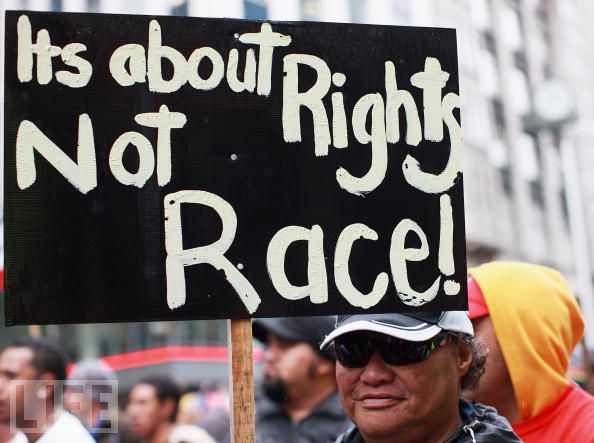
From today’s Sunday Star Times;
DISGRUNTLED Maori have warned that Rugby World Cup celebrations could be disrupted if their grievances – including those over the foreshore and seabed – aren't addressed.
I believe this is a tangible threat. Maori are beginning to grow impatient, certainly the younger generations are frustrated with the pace of change. The older generations are willing to accept, and are indeed accustomed to, sluggish progress, whereas young Maori are accustomed to a world that moves fast, a world where change is rapid.
The government would be wise to treat this threat as genuine. It would be incredibly reckless to disregard this as mumbo jumbo coming from the mouths of a few disaffected brown people. The possibility of mass protest is very real. The protest organisers will, I imagine, have little trouble mobilising thousands of protestors given the high unemployment environment, likely welfare changes and passage of the MCA bill. As Maori households continue to struggle political awareness will increase. The challenge is to channel that awareness into mass political action which admittedly is easier said than done. It is worth keeping in mind though that for Maori households, and of course many non-Maori households, it is painful knowing that you struggle but not as a consequence of your own actions. It is painful knowing you struggle due to incompetent economic management and a failure, on the government’s part, to neutralise the worst effects of their economic policy, for example the rise in GST. In my opinion poverty and deprivation, i.e. the current economic conditions, should be enough to amplify political awareness and facilitate political change.
Maori have identified an opportunity to push the government hard and they have a powerful weapon – leverage. Protest action, or the threat of, will deter more than a few overseas spectators. The government literally cannot afford to let this happen. The government looks to the RWC in the hope that it will stimulate the economy and help kick start growth. A significant decrease in spectator numbers will have a profound negative effect on the economy, after all the tournament is already forecast to make a loss. Therefore, it would be reckless for the government to disregard the threat of protest action.
The government also cannot afford to contain any protest. Given the authoritarian nature of the current government I can imagine the creation of “free speech zones”. Free speech zones are an undemocratic American creation used to contain protests. They are used to keep protestors out of the public eye, make them invisible. Of course such undemocratic behaviour would never be acceptable in New Zealand, or at least I hope it would never be acceptable, therefore the government would need to search for different means. How about kettling? This would be the worst response. There is no better way to turn a peaceful protest in to a riot. Maori respond in kind to physical confrontation. Without doubt things will turn very, very ugly. This would have the flow on effect of mobilising many more Maori. Violent clashes during such an international showpiece will do nothing for New Zealand’s reputation as a safe and stable tourist destination nor will it do anything for New Zealand’s standing in the international community.
Ultimately, for the sake of the economy and our international standing, the government cannot allow any protest during the RWC. Therefore, the protestors will have a significant amount of leverage.
However, the protestors should consider this. The international media are not going to pay any attention to an insignificant minority making some noise during an insignificant sporting tournament. The likes of the colonial Stephen Jones are not going to cover any story that is not related directly to what is happening on the rugby field. The international media present will be, by and large, sports journalist from Europe and covering political demonstrations in New Zealand will not be part of their brief or expertise.
There is also the threat of clashes between Maori and die hard rugby fans. Do Maori really want a repeat of the Springbok Tour? Is it really fair to divide the nation during what is meant to be a triumphant moment in New Zealand history? Is it not better to hold ones protest at the ballot box? Vote this scum government out?
Protest during the RWC will create anti-Maori feeling that will last a decade or more. Having said that equality and justice is more important than what others think of you. Sadly, New Zealanders fail to realise their own privilege, even if they did I am unsure they would have the courtesy to extend that privilege to the underprivileged. New Zealand is not an egalitarian country. We are a country divided, divided along class lines, divided according to ethnicity and divided along ideological lines. We are not equal, we are unequal. We are a country where the privileged are determined to preserve what they have over the rest of the country. Whether that be weakening work rights or failing to acknowledge the interests of the indigenous people. The privileged operate under the assumption that their rights are paramount and exclusive. Perhaps it will take mass political action during the RWC to effect change for the underprivileged, perhaps it will take mass political action during the RWC to win the rights that the privileged enjoy.
The government should not ignore the warnings. Maori will wreck the government’s precious tournament. All Maori ask for is equality.
Subscribe to:
Posts (Atom)