|
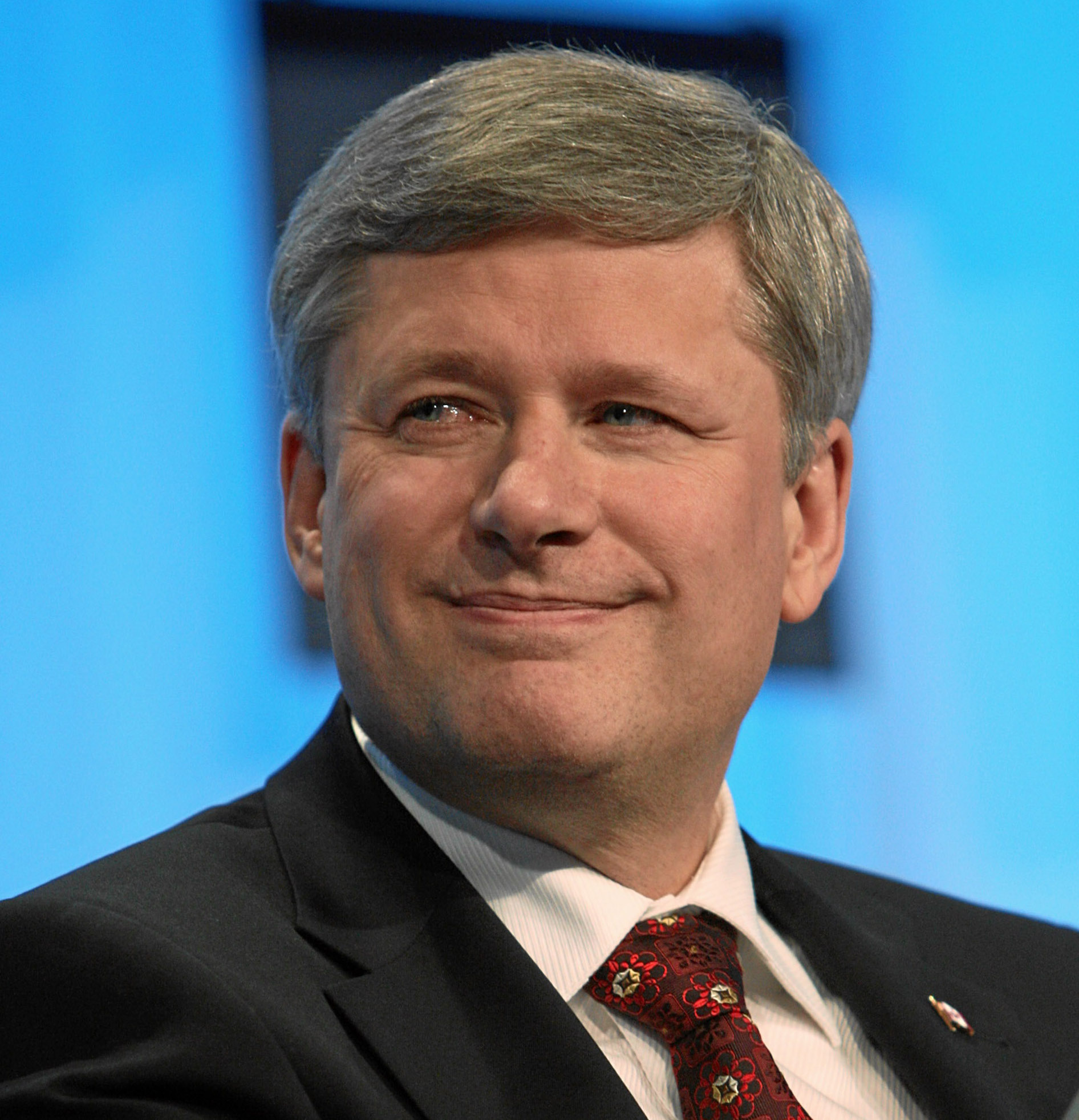
| Prime Minister Stephen Harper (looking far too pleased with himself) By Remmy Steinegger |
"We also have no history of colonialism. So we have all of the things that many people admire about the great powers but none of the things that threaten or bother them" – Stephen Harper, Prime Minister of Canada.
That's funny. In 2008 Harper apologised in Parliament for residential schools - one of the most insidious expressions of colonialism in Canada. In a moment of lucidity he explained that:
"Two primary objectives of the residential school system were to remove and isolate children from the influence of their homes, families, traditions and cultures, and to assimilate them into the dominant culture. These objectives were based on the assumption Aboriginal cultures and spiritual beliefs were inferior and unequal...
Today, we recognize that this policy of assimilation was wrong, has caused great harm, and has no place in our country".
There's a galaxy between the first quote and the second. But Harper's wrong in both quotes to frame colonisation as a historical event. Colonisation is a series of events. Harper should know, but the state and its agents never admit how they came to occupy their privileged positions. Canada's economy was was built off of the back of the theft of indigenous lands. But admitting that would be to deny Canadian exceptionalism. It’s better to practice the politics of amnesia.
In 1920 Duncan Campbell Scott, the then Minister of Indian Affairs, said this:
"Our objective is to continue until there is not a single Indian in Canada that has not been absorbed into the body politic and there is no Indian question".
Scott is describing colonialism as a strategy. Like Harper explains, assimilation ideologies are about removing and isolating indigenous people from their culture. But that leaves some aspects unexplained. In short, the logic of colonialism is this: occupy indigenous land, subjugate indigenous people and exploit their labour and resources.
In 1583 Sir Humphrey Gilbert declared Newfoundland the first English colony. Gilbert claimed to act under the royal prerogative. That act marked the first stanza in Europe’s colonisation of Canada. Successive waves of English, French and other European colonists pushed west. Occupation begun.
But the country wasn’t terra nullius. Where indigenous people were met, they were pacified. First Nations people were never conquered in the sense of, say, raupatu. The preferred method was treating. The government derived its authority from Treaties signed with First Nations people. The core promise was equality. But (as we know) the Crown only recognises its own sovereignty. Subjugation begun.
The government wasted no time in acquiring an economic base. In 1876 the Indian Act was passed and worked to dispossess indigenous people of their land and resources. The roots of economic exploitation took hold. The parallels with New Zealand colonists, the Treaty of Waitangi and the Native Lands Act 1862 are obvious and uncomfortable.
And the pattern continues. In 2012 the Idle No More movement erupted. The movement appeared in response to Bill C-45, an omnibus bill that didn’t recognise indigenous fishing rights and reduced environmental protection. The movement also opposed a suite of other omnibus bills including the First Nations Private Property Ownership Act and the First Nations Financial Transparency Act. The first act allowed private property ownership within Reserve boundaries. The second act imposed standards on First Nations governments that far exceed standards for municipal, provincial and federal officials. Underlying it all is the assimilation of First Nations people and the destruction of their culture.
The newest expression of the colonial state is the suppression of the Elsipogtog. The Royal Canadian Mounted Police (including snipers) are engaged in repressing protests against seismic testing (a precursor to fracking operations). Harper knows that the "Indian problem" is only resolved through assimilation into the "body politic" or total exclusion. There's no middle ground.
 |
| Duncan Campbell Scott, evil Canadian bureaucrat |
But the country wasn’t terra nullius. Where indigenous people were met, they were pacified. First Nations people were never conquered in the sense of, say, raupatu. The preferred method was treating. The government derived its authority from Treaties signed with First Nations people. The core promise was equality. But (as we know) the Crown only recognises its own sovereignty. Subjugation begun.
The government wasted no time in acquiring an economic base. In 1876 the Indian Act was passed and worked to dispossess indigenous people of their land and resources. The roots of economic exploitation took hold. The parallels with New Zealand colonists, the Treaty of Waitangi and the Native Lands Act 1862 are obvious and uncomfortable.
And the pattern continues. In 2012 the Idle No More movement erupted. The movement appeared in response to Bill C-45, an omnibus bill that didn’t recognise indigenous fishing rights and reduced environmental protection. The movement also opposed a suite of other omnibus bills including the First Nations Private Property Ownership Act and the First Nations Financial Transparency Act. The first act allowed private property ownership within Reserve boundaries. The second act imposed standards on First Nations governments that far exceed standards for municipal, provincial and federal officials. Underlying it all is the assimilation of First Nations people and the destruction of their culture.
The newest expression of the colonial state is the suppression of the Elsipogtog. The Royal Canadian Mounted Police (including snipers) are engaged in repressing protests against seismic testing (a precursor to fracking operations). Harper knows that the "Indian problem" is only resolved through assimilation into the "body politic" or total exclusion. There's no middle ground.
As Maori, we should play an active part in opposing colonial tactics. Why? Because it's own experience too. Colonialism isn't a historic event - it's an ongoing process. It's about being a good ally. If Harper succeeds in eliminating “the Indian question”, then maybe he can claim that Canada has no history of colonialism. History is written by the winners.